A roof waterproofing proposal should identify the condition being treated, the existing substrate, and the complete proposed system. Coating, localized repair, and replacement are different options. Use the sequence below to decide whether an estimate explains a suitable treatment or merely promises a new surface without addressing the roof beneath it.
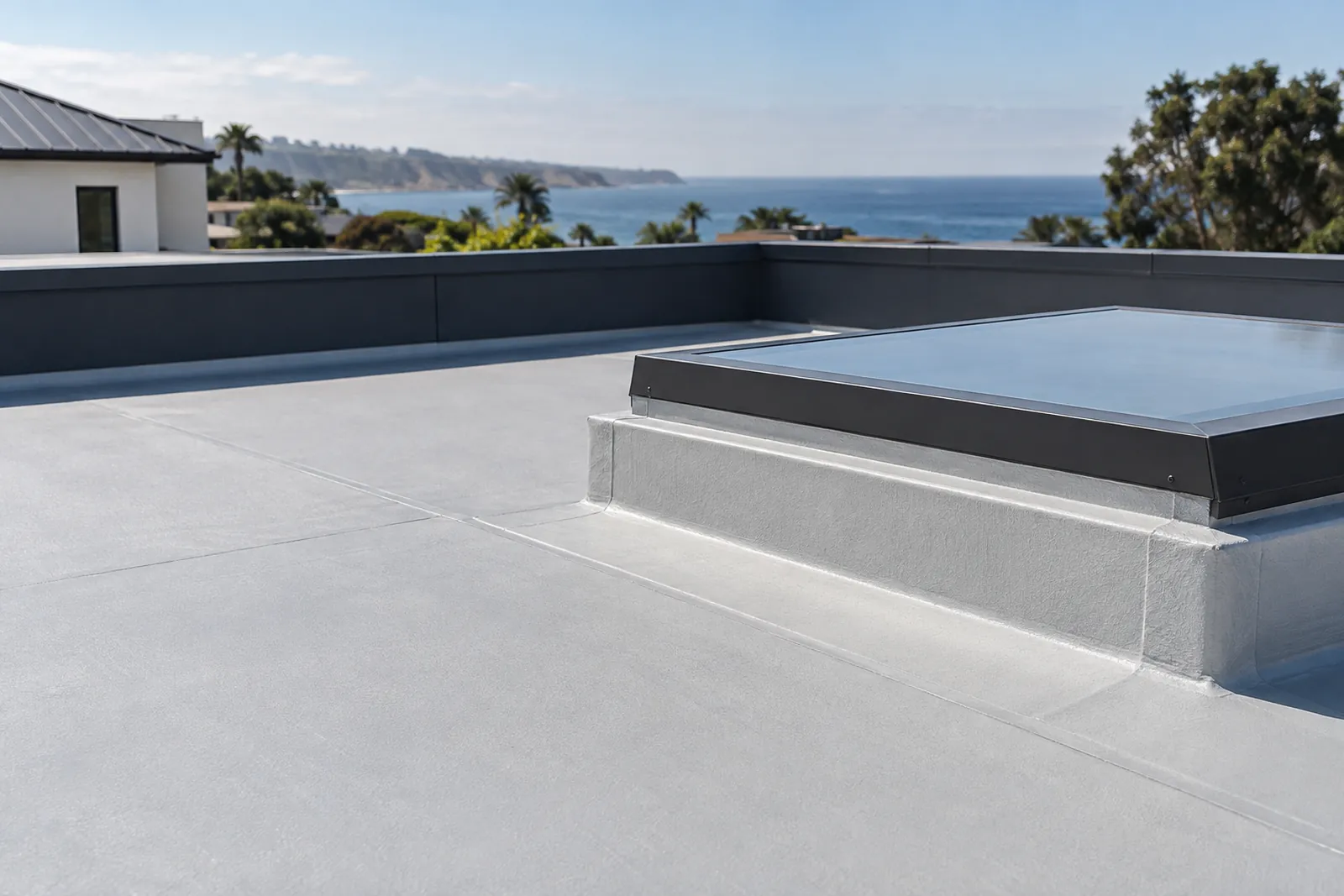
Identify what waterproofing means in this proposal
Record whether the work is a local flashing repair, a roof coating system, a new membrane, or another defined treatment. Include the surfaces and roof areas covered. The phrase waterproof the roof does not establish materials, preparation, thickness requirements, or detail work. A useful estimate translates the phrase into a named system and a description of the problem it is intended to address.
Describe the existing roof before accepting a product
Gather records of the current covering and previous coatings. Mark damaged surfaces, recurring leaks, and known repairs on a simple plan. Establish which conditions have been observed and which need further investigation. The suitability of a treatment depends on the actual assembly, not only the fact that the roof is flat. A proposal should identify any conditions that would disqualify the roof from the proposed restoration.
Make substrate preparation a measurable scope
Cleaning and preparatory repairs affect whether a specified treatment can be applied correctly. GAF’s liquid-applied roofing guidance calls for suitable substrates and verified adhesion, and Johns Manville publishes coating choices and detail systems for different applications. Those references show why preparation cannot be reduced to a vague promise to wash and coat. The selected product’s requirements should establish the actual process, including how compatibility questions are resolved before full application.
Do not let the open roof area hide the details
List seams, drains, wall transitions, pipe openings, curbs, and equipment interfaces individually. A roof field measured in square feet is only one part of the work. Identify existing repairs that will be removed or retained and the treatment at each boundary. If the quote excludes a wall junction that is connected with the reported leak, that exclusion needs to be understood before the owner expects the roof treatment to resolve the symptom.
Treat standing water and other moisture sources separately
A coating does not change the roof’s shape or automatically clear a restricted drain. Identify recurrent water locations and investigate the reason. Equipment drainage and adjoining building components may also need consideration. Establish whether correcting those conditions is included or requires another trade. Product-specific limits govern the chosen system; a claim that a coating handles water should not replace a drainage assessment or a clear maintenance plan.
Compare three hypothetical outcomes
One roof may have a defined damaged detail suited to a localized compatible repair. Another may have a suitable existing surface for a specified restoration after preparation and repair. A third may have conditions that make retaining the assembly unsuitable, requiring a replacement comparison. These examples explain the choices; they are not diagnoses of your roof. The assessment should show which findings support the recommendation and what information could change it.
Record the finished system and its limits
Keep the product names, treated areas, preparation scope, approved changes, and any coverage documents with the property records. Note maintenance instructions and the process for compatible later repairs. If work excludes occupied decks, walls, interior damage, or underground waterproofing, preserve those boundaries. A useful completion file states what was done and how to care for it, rather than relying on the broad word waterproof as a guarantee against every future moisture problem.
| Option | Retains | Must establish |
|---|---|---|
| Localized repair | Most of the existing assembly | Defined defect and compatible repair boundary |
| Coating or restoration | Suitable existing roof components | Preparation, adhesion, detail work, and product suitability |
| New membrane or replacement | Only expressly approved retained components | Removal scope, new assembly, and connections |
| Drainage correction | Depends on the design | Cause of water accumulation and responsible scope |
Project Checklist
- Name the treatment instead of relying on waterproofing alone.
- Identify the existing roof and previous products.
- Document suitability and preparation requirements.
- List details as well as roof area.
- Resolve drainage concerns separately.
- Compare retained conditions across alternatives.
- Save product, maintenance, and actual coverage records.
Questions to Ask Before You Decide
Is a thicker coating always a better roof?
Can a roof coating replace missing insulation or damaged decking?
What makes two waterproofing quotes comparable?
References
GAF: liquid-applied roofing substrate guidance
Johns Manville: roof coatings and detail systems