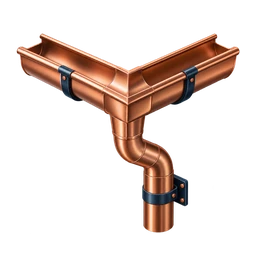
Gutters and downspouts work as a drainage route, from the roof edge to the discharge point. Solving overflow may involve debris removal, repair, layout changes, or replacement. A proposal should explain where the water goes after it leaves the gutter, not only the profile and color of the new metal.

Gutters & Downspouts for Your Property
A leaking corner and a gutter that overflows along an entire roof edge are different problems. Start by recording where water escapes during rain and where the downspouts discharge. Monterey Roofing & Metal Co. handles gutter and downspout inquiries alongside roof repair, replacement, and custom sheet metal work.
Gutter repair and replacement
The assessment should distinguish a local joint or support problem from broader deterioration or an unsuitable layout. Replacing one damaged section may be practical when the remaining system is serviceable. A complete replacement should define all included runs, outlets, and downspouts.
Downspout routing
Downspouts connect the roof drainage system to the ground-level route. Pacific Northwest National Laboratory guidance emphasizes carrying roof runoff away from the building. The actual destination should suit the property and applicable drainage requirements; discharging beside the foundation is not a complete plan.
Coordination with roofing and fascia
A gutter project may expose concerns at the roof edge or supporting fascia. Identify those possibilities before final pricing. If roofing is being replaced, coordinate the edge detail and gutter scope so each component’s responsibilities are clear.
Describe overflow while the evidence is visible
From a safe indoor or ground-level location, note which roof edge overflows and whether it happens at one corner or along a longer run. Photograph staining, a detached downspout, or water spilling at a joint. Also note nearby trees and whether the issue returns after cleaning. This information helps distinguish a maintenance concern from a problem requiring a different repair or drainage layout.
Map the whole water route
A complete plan follows water from the roof into the gutter, through an outlet and downspout, and toward an appropriate discharge point. Identify walkways, planting beds, driveways, and neighboring boundaries that may be affected. An underground pipe should not be assumed clear or functional simply because the downspout enters it. State whether evaluating or changing that connection is included or requires a separate drainage professional.
Compare material, profile, and practical upkeep
Choose the gutter profile and finish in relation to the building, roof edge, and maintenance access. Copper or another specialty metal may change the appearance and surrounding material considerations. Guards should be evaluated against the site and debris conditions, with a clear understanding of how the system is inspected and cleaned. No gutter accessory should be treated as a promise that maintenance will never be needed.
Define the scope beyond a linear-foot total
A measured length is useful, but it does not list corners, outlets, downspouts, offsets, removal, or disposal. Record where new runs begin and end and which existing components remain. Include access constraints and any fascia repair allowances. If two quotes include the same length but different numbers of outlets or a different discharge plan, they are describing different systems.
Use roof work to resolve roof-edge questions
When replacement roofing and gutters are planned together, settle their interface before either trade finishes. The proposed detail should explain how roof runoff reaches the gutter and how the gutter is supported. Establish who deals with any deteriorated fascia and how it is approved. Keep a simple drawing of the completed layout so later maintenance addresses the intended drainage route rather than only the most visible section.
| Observed concern | What the scope should address |
|---|---|
| Leak at one joint | Local condition and repair limits |
| Overflow after cleaning | Layout, outlets, downspouts, and discharge |
| Sagging or detached run | Supports and underlying fascia |
| Water near the foundation | The route beyond the downspout outlet |
| New roof planned | Roof-edge detail and timing of gutter work |
What to Include in Your Gutters & Downspouts Request
- Locations of leakage or overflow
- Included gutter runs, corners, and outlets
- Downspout positions and discharge route
- Roof-edge and fascia conditions
- Access for future cleaning
- Separate responsibility for underground drainage
Gutters & Downspouts Questions
Will larger gutters stop every overflow problem?
Can a leaking gutter be repaired instead of replaced?
Do gutter guards eliminate cleaning?
Reference: Pacific Northwest National Laboratory: gutters and downspouts. Confirm current requirements for the actual property and scope.