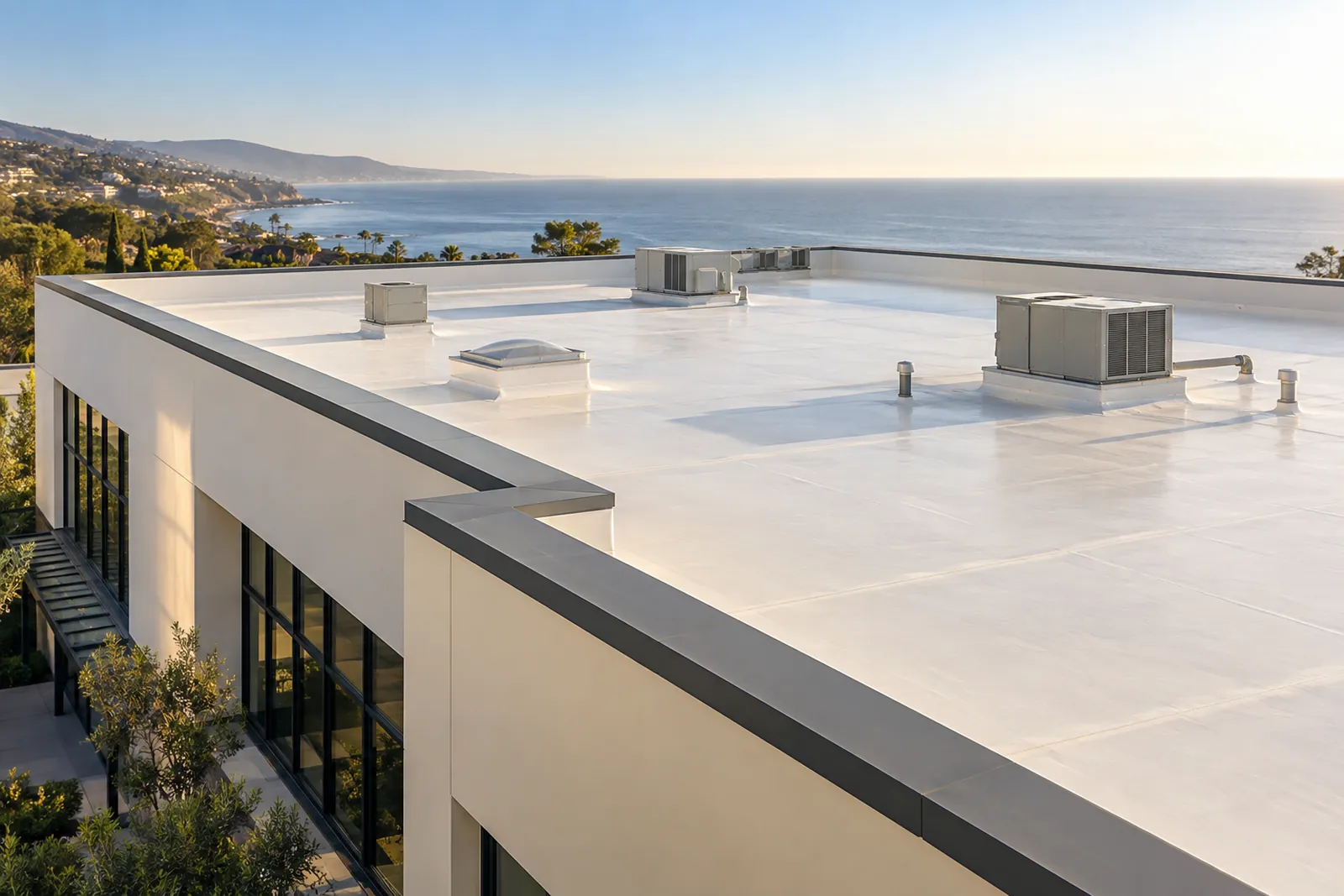
Commercial and flat roofing should be planned around the existing assembly, drainage, rooftop equipment, and building operations. Repair, recover, coating, and replacement are separate options. The right comparison starts with documented roof conditions and the limits of what can remain in place.
Commercial & Flat Roofing for Your Property
A commercial roof protects more than a building shell. It sits above tenants, stock, equipment, and daily work. For Monterey County offices, retail properties, multifamily buildings, and other commercial sites, the roofing scope and the operational plan need to be developed together.
Single-ply roofing systems
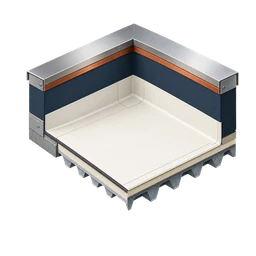
TPO, PVC, and EPDM are different membrane families, not interchangeable labels for one white roof. A proposal should identify the actual system, attachment method, insulation or cover board, and details around drains, walls, and equipment. The membrane name alone does not define the full assembly.
Roof drainage and openings
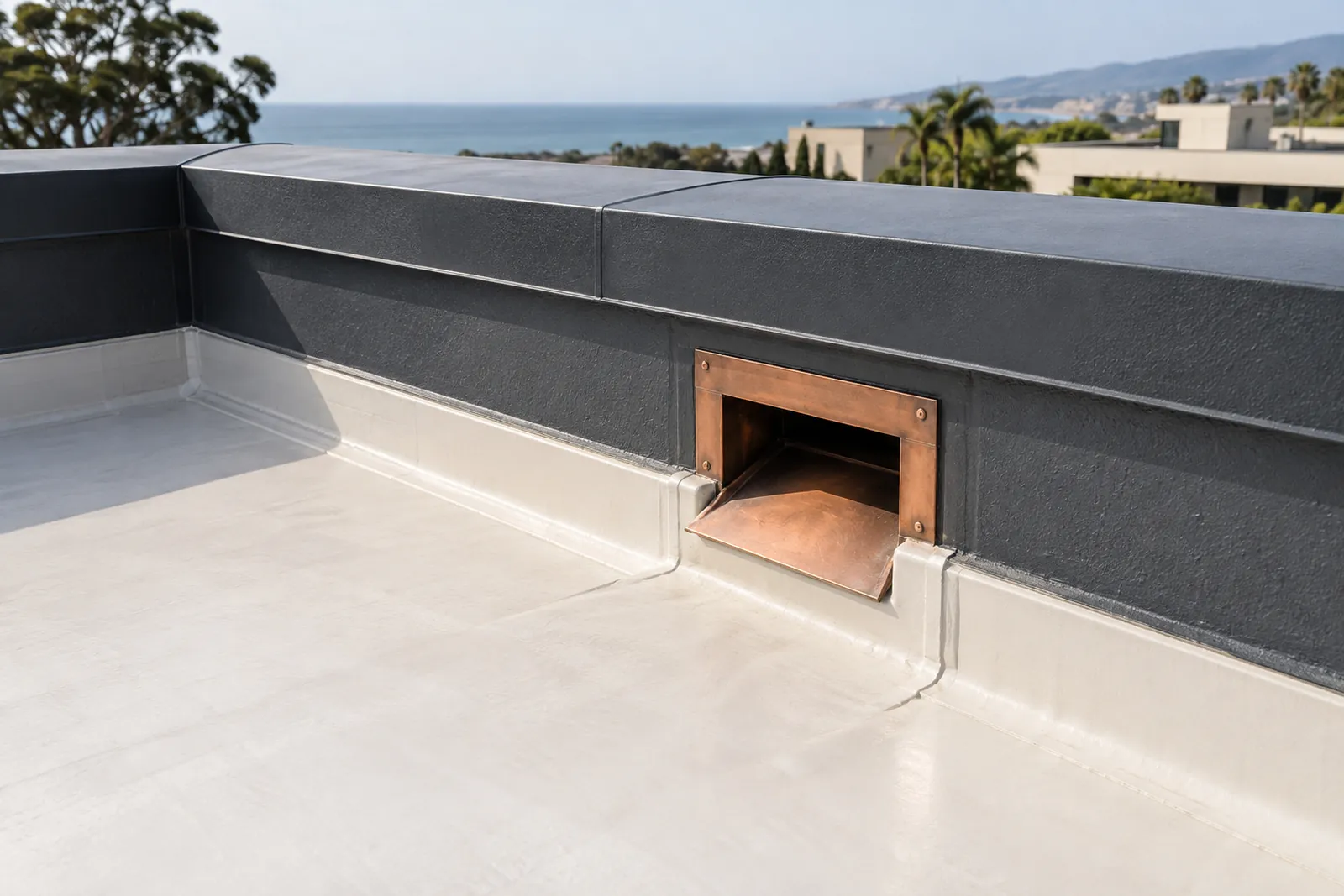
A plan should identify drains, scuppers, overflow provisions, and openings around rooftop equipment, pipes, vents, or skylights. Record problem areas on a roof plan. Persistent water or recurring leaks call for investigation of the underlying detail, not just a new surface color.
Work around occupied buildings
Delivery, debris handling, roof access, odors, noise, and equipment coordination can affect tenants. Set expectations before scheduling. A building that stays open during work needs a different access and communication plan from a vacant property.
Assemble the building record first
Gather the roof age if known, previous repair reports, available drawings, warranty documents, and a list of rooftop equipment. Mark recurring leak locations by roof area and tenant space. A report that maps conditions is easier to use than a collection of unrelated close-up photographs. Where records are incomplete, distinguish confirmed information from assumptions so the quote does not quietly rely on an undocumented existing assembly.
Compare repair, recover, and replacement fairly
A repair addresses a defined issue. A recover proposes a new roof over components that remain, subject to suitability and applicable requirements. Replacement removes the specified existing assembly before rebuilding it. Each option should state its limits, including how concealed conditions will be assessed. These proposals cannot be compared by area price alone when one includes removal, insulation changes, or new perimeter details and another does not.
Separate roof work from equipment work
HVAC units, exhaust equipment, solar systems, and service walkways introduce coordination questions. Identify who disconnects, raises, removes, or reinstalls each item when necessary. Include the treatment of abandoned openings and redundant supports. If equipment will be replaced soon, discuss that before finalizing the roof scope; otherwise the owner may pay for new roof details that another trade must shortly alter.
Create a practical plan for the occupied property
List working hours, delivery routes, loading restrictions, customer entrances, and tenant notice requirements. Name the person who can authorize changes and the person who manages day-to-day access. Decide how conditions discovered during work will be communicated to an off-site owner. For a phased project, show the phase boundaries clearly and describe how areas awaiting later work will be handled.
Turn completion documents into a maintenance record
The final file should identify the installed system, roof areas, relevant product documents, and any coverage actually issued. Include the location of repaired details and instructions for reporting future damage. A maintenance plan should account for roof access by other trades as well as ordinary inspection. Manufacturer references on this page explain system choices; they do not represent a certification or warranty offered by this business.
| Option | Main question before selection |
|---|---|
| Localized repair | Is the defect defined and the adjacent assembly serviceable? |
| Coating or restoration | Is the substrate suitable for the specified system? |
| Recover | Can the proposed retained assembly support an approved new system? |
| Replacement | Which layers, drainage details, and equipment interfaces change? |
What to Include in Your Commercial Roofing Request
- Roof plan and recurring leak locations
- Existing assembly and moisture-assessment scope
- Selected membrane and attachment details
- Drainage and perimeter work
- Equipment and tenant coordination
- Completion records and maintenance responsibilities
Commercial & Flat Roofing Questions
Does a flat roof need a complete replacement when it leaks?
Can a new membrane be installed over the existing roof?
Can tenants stay in the building during roofing?
Reference: Carlisle: commercial roofing product reference. Confirm current requirements for the actual property and scope.