Steel, aluminum, and copper are not three grades of the same roof. They are different base metals that can be specified in different roof systems. Compare suitability, appearance, compatible details, and the complete installed price. The most useful choice is the documented system that fits your property and priorities.
Steel: identify the protective system, not just the metal
Steel roofing is supplied with protective treatments and finish options. The Metal Roofing Alliance identifies coated steel as a common roofing material and discusses material selection for marine settings. For an owner, the useful next step is to record the exact product and its finish instead of treating all steel panels as identical. If your Monterey-area property has coastal exposure, keep the manufacturer’s location-related suitability and coverage information beside that specification.
Aluminum: an option to evaluate for coastal exposure
The Metal Roofing Alliance describes aluminum as having increased corrosion resistance compared with steel and identifies its use in coastal environments. That gives a reason to evaluate it, not an automatic approval for every panel and accessory combination. Keep the attachment approach, flashings, roof shape, and selected finish in the comparison. Do not assume a quote becomes complete just because the base metal is appropriate for consideration near the coast.
Copper: decide whether changing appearance is part of the goal
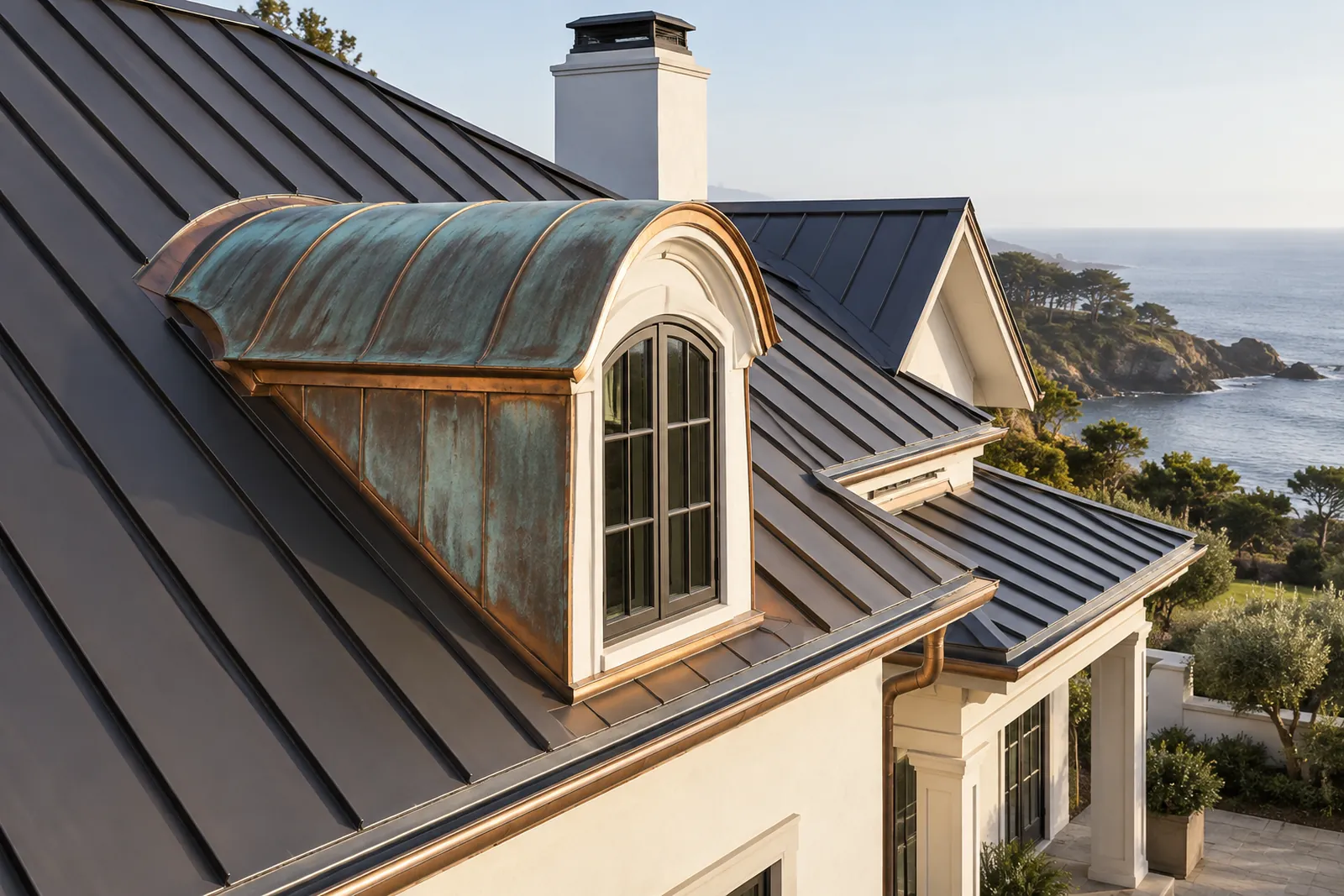
Copper develops a patina as it weathers. That changing appearance can be part of its appeal, but a new sample should not be treated as a permanent color guarantee. Review nearby surfaces and drainage paths with the designer or installer. The Copper Development Association identifies issues with contact between dissimilar metals and warns against directing copper runoff onto exposed aluminum. A copper roof or accent therefore needs a coordinated surrounding detail, not an isolated material upgrade.
Panel design remains a separate decision
A metal label does not tell you the seam design, roof areas, or accessory scope. Write the panel product alongside the metal on every proposal. Include visible trim and the treatment of skylights, chimneys, walls, and roof edges. If one option uses a different panel arrangement or replaces more flashing, identify that difference before attributing the entire price change to the base metal. A comparison should explain what is actually changing.
A practical example: whole roof versus accent roof
Imagine a homeowner considering a copper entry canopy while replacing the main roof with another metal system. That is not the same purchase as a full copper roof. The relevant questions include the canopy’s water route, its connection to nearby materials, the appearance from the street, and the responsibility for the transition. This hypothetical example shows why a roof drawing and detail schedule can be more useful than a simple ranking of metals from cheapest to most expensive.
Compare ownership questions as well as installation price
List access for maintenance, likely future equipment changes, and the documents needed for compatible repairs. A more expensive proposal is not automatically better, and a lower total may exclude important surrounding work. Compare the same roof planes, removal, deck allowances, flashing, and disposal. Then consider whether the material and appearance differences are worth their actual quoted cost for your property. Avoid applying a general internet price per square foot to an unmeasured roof.
Use the shortlist to get a final specification
Reduce the choice to systems with documented suitability, complete scopes, and an appearance you want. Resolve remaining questions before fabrication: exact finish, roof boundaries, treatment of adjoining metals, and the documents associated with coverage. Record which assumptions still depend on opening the existing roof. A final selection should leave fewer unknowns than the first consultation, not simply attach a favored metal name to an otherwise undefined project.
| Material | Selection focus | Question to resolve |
|---|---|---|
| Steel | Exact protective treatment and finish | Is this specific product suitable for the address? |
| Aluminum | Coastal suitability and complete assembly | Which panel and accessory system is proposed? |
| Copper | Weathering appearance and neighboring materials | How are contact and runoff details handled? |
| Every option | Equivalent installed scope | Do all quotes include the same roof areas and details? |
Project Checklist
- List the exact product under each material option.
- Compare the same removal and flashing scope.
- Review transitions to other metals.
- Decide how important the weathered appearance is.
- Retain the selected specification and written terms.
Questions to Ask Before You Decide
Is steel roofing unsuitable everywhere near the coast?
Will copper stay the color of the sample?
Which metal costs the least for my roof?
References
Metal Roofing Alliance: metal roofing materials
Copper Development Association: architectural design handbook